
Technical Insights
Why PPR Pipes are Replacing PVC in Modern Industrial Plumbing
May 15, 2026 TEC Engineering Team
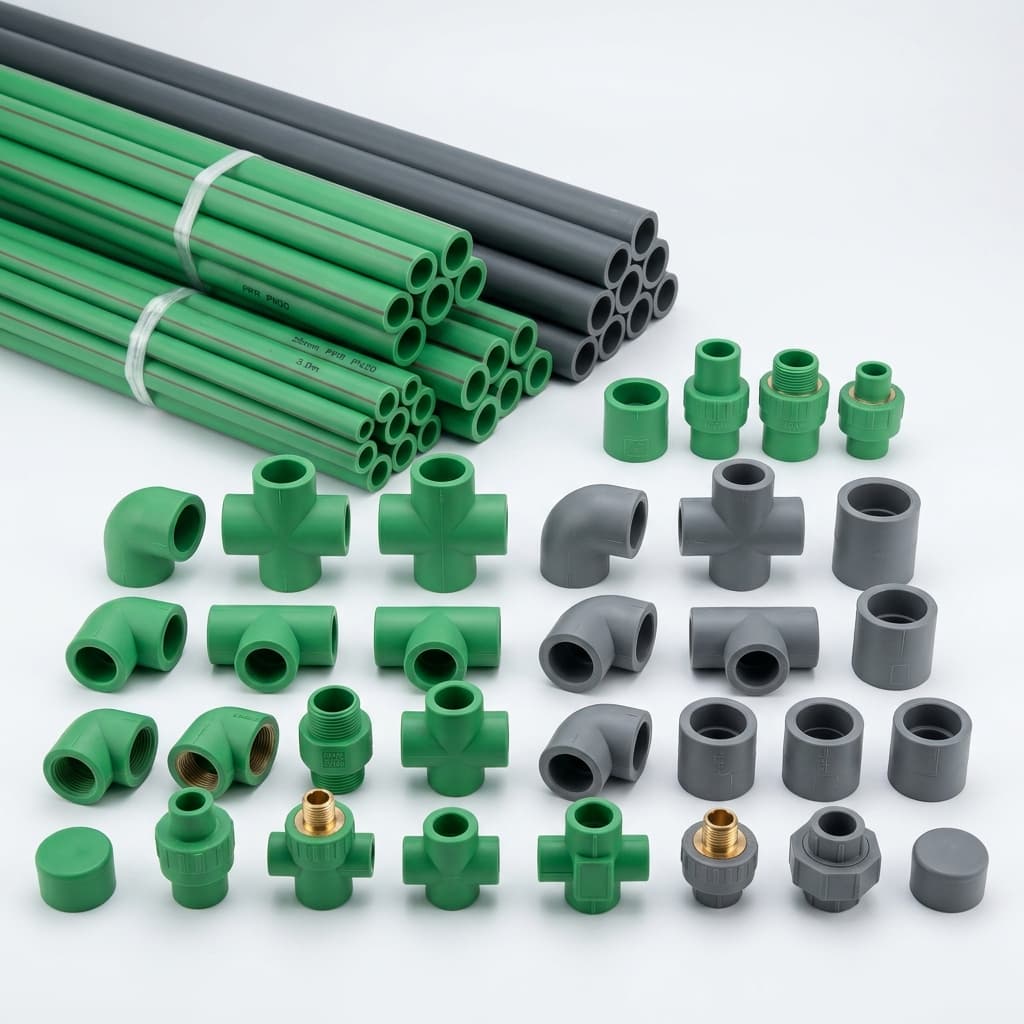
PPR (Polypropylene Random Copolymer) has rapidly become the standard in modern industrial and residential plumbing, replacing traditional PVC and CPVC systems. But why the shift?
1. Thermal Resistance Unlike PVC, which begins to warp and degrade at temperatures above 60°C, high-quality PPR pipes from TEC INDUSTRIES can handle continuous flow at 95°C. This makes them perfect for hot water distribution and industrial boiler feeds.
2. Leak-Proof Fusion Joints The most significant advantage of PPR is its joining method. Instead of relying on toxic chemical solvents (like PVC glue) or threaded joints, PPR uses thermal fusion welding. The pipe and fitting are heated and fused together, becoming a single homogeneous piece of plastic. The joint becomes the strongest part of the system.
3. Chemical Inertness PPR is highly resistant to a wide range of chemicals, making it the preferred choice for chemical processing plants, pharmaceutical manufacturing, and corrosive fluid transport.
4. Zero Scaling The ultra-smooth inner surface of TEC PPR pipes prevents scaling, calcification, and pressure drop over time, ensuring consistent flow rates for the lifetime of the installation.
Need more technical advice?
Our engineering team is ready to help you specify the right products for your industrial project.
Contact Our Engineers